
Made by our team of specialist craftspeople in our Peckham workshop, the Forge Collection is our permanent range of kitchen knives. Guided by the same principles that have shaped our work from the beginning, these knives combine understated design with versatility and strong cutting performance. Equally suited to home cooks and professional kitchens, they are made to be dependable, comfortable to use, and easy to maintain.
Each knife is available in a choice of stainless clad Aogami Super or folded iron clad steel, and with proper care will last a lifetime.
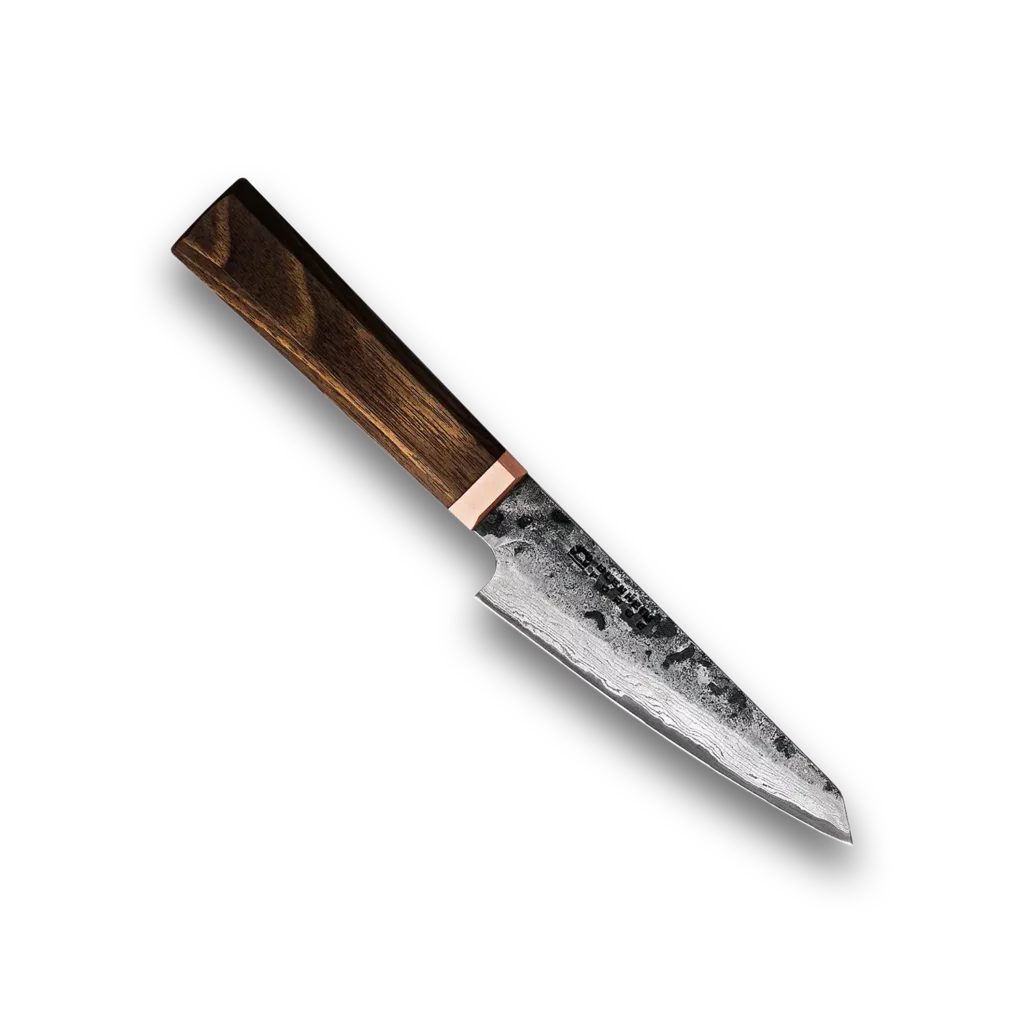
A light, precise and beautifully balanced knife, ideal for intricate tasks, off-board work and smaller preparation where control matters most.
£200.00 – £230.00Price range: £200.00 through £230.00
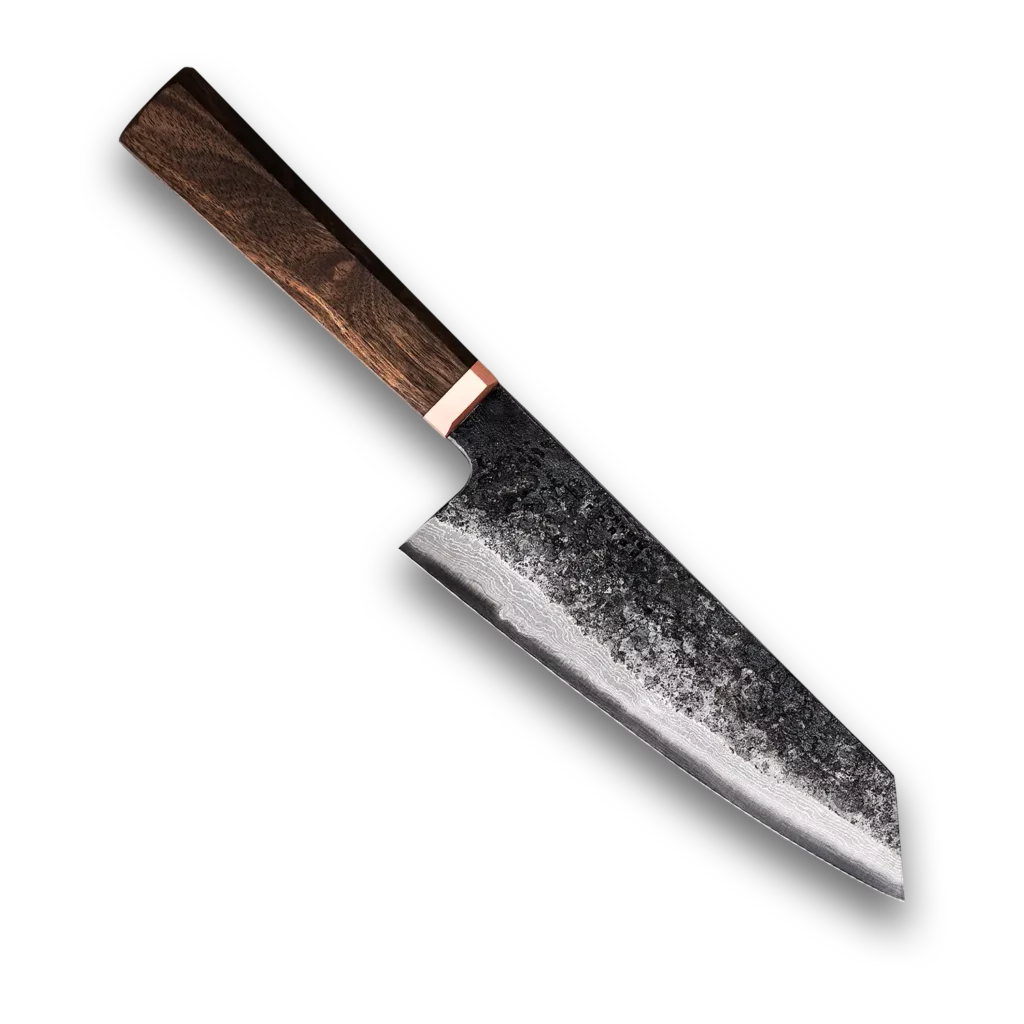
The most versatile shape in the range, the Santoku is an elegant all-rounder suited to meat, fish and vegetables, and an excellent foundation for any set.
£290.00 – £320.00Price range: £290.00 through £320.00
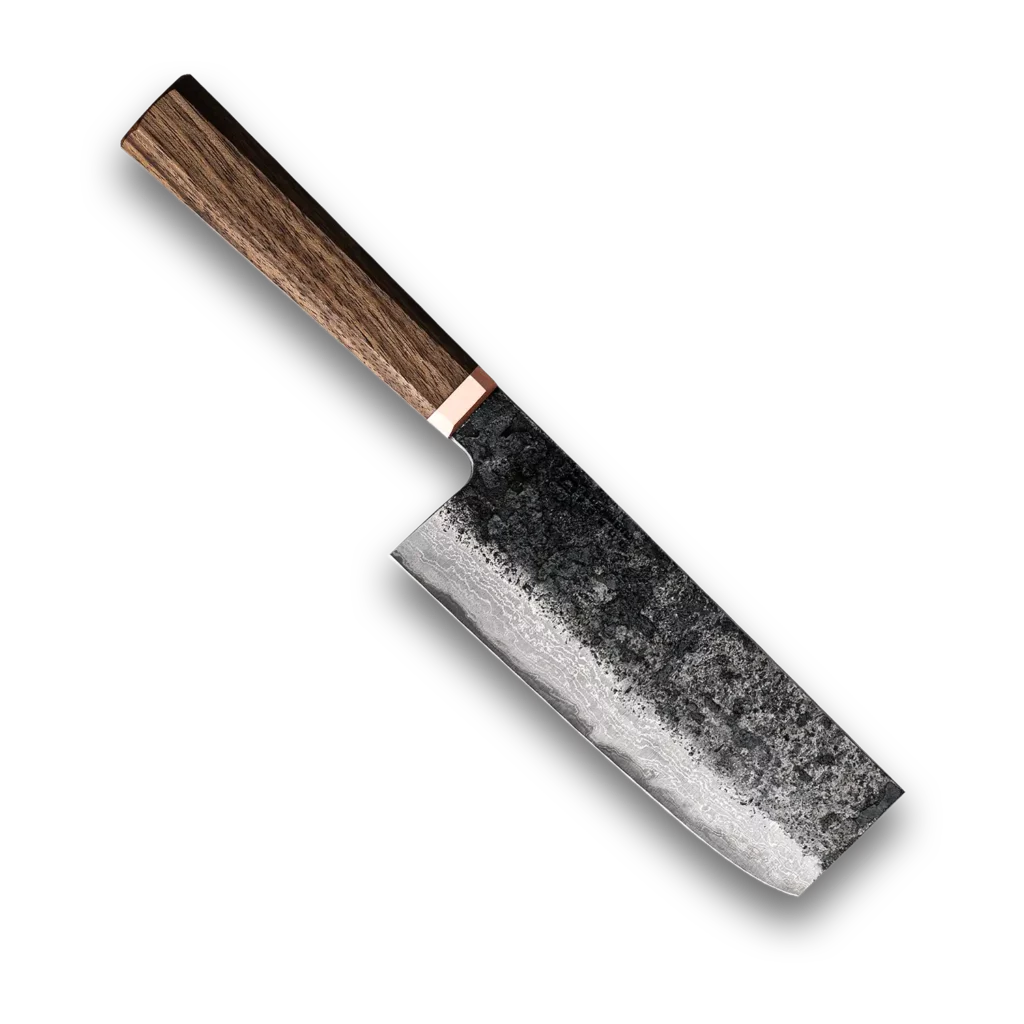
A refined vegetable knife forged extra thin for clean, effortless cutting, with a wide flat blade that lends itself perfectly to precise chopping and dicing.
£310.00 – £340.00Price range: £310.00 through £340.00
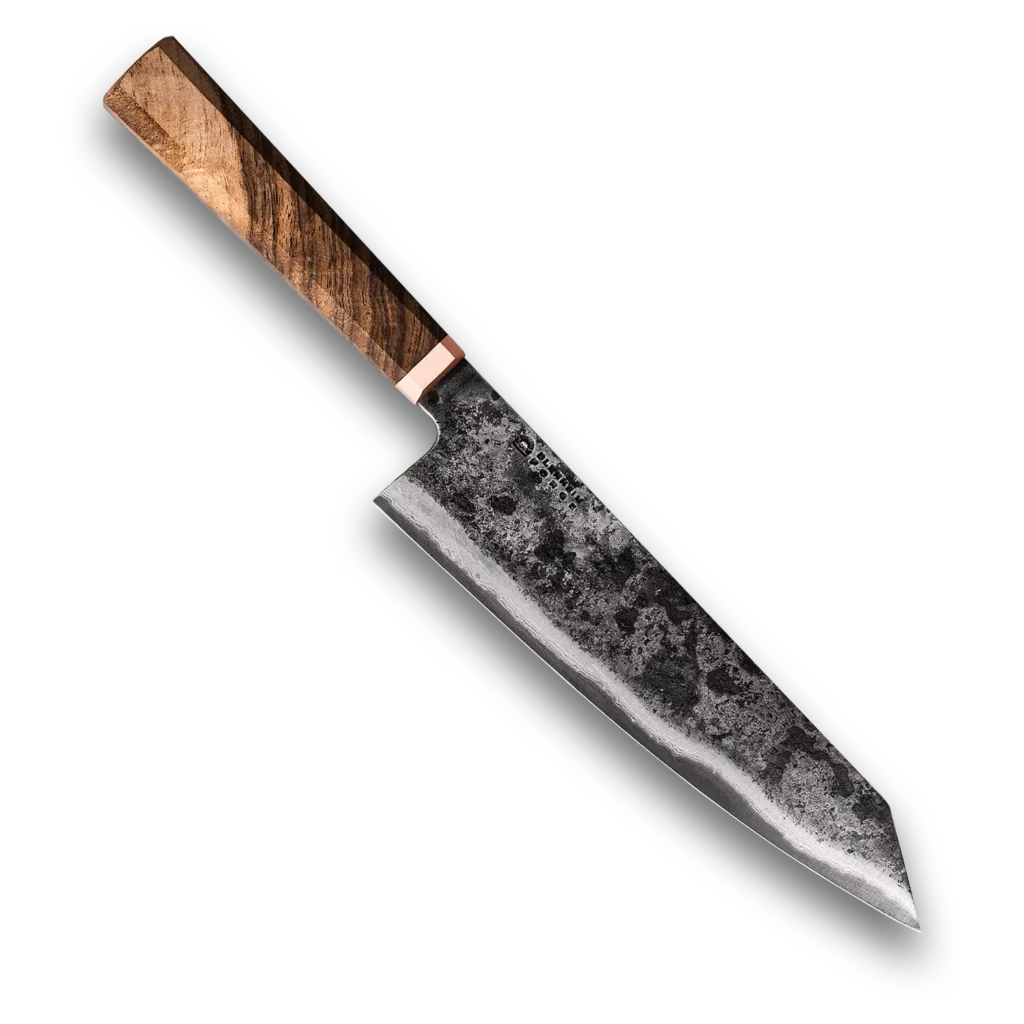
The largest knife in the range, the Gyuto is a true all-round kitchen knife with the length, balance and versatility to handle meat, fish and vegetables with ease.
£320.00 – £350.00Price range: £320.00 through £350.00
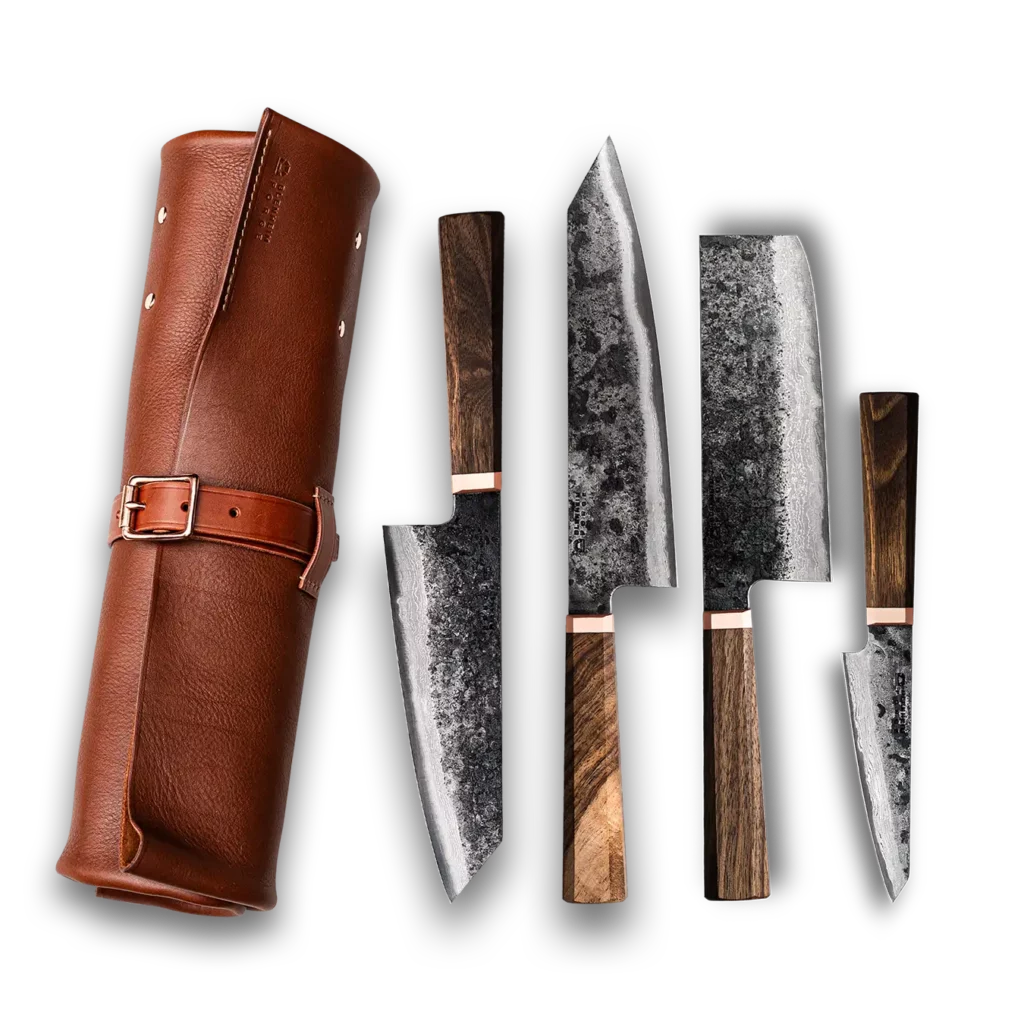
A complete set of four knives designed to cover every aspect of kitchen preparation, from delicate small work to vegetable chopping, general prep and slicing meat and fish.
£1,260.00 – £1,380.00Price range: £1,260.00 through £1,380.00
The Forge Collection blades are available in two laminate constructions: stainless clad Aogami Super and folded iron clad. These are two steels we have worked with since very early in our knifemaking, and both are particularly well suited to the way we like to forge and the kinds of knives we like to make. Both are made for us by Takefu Special Steel in Echizen, Japan, one of the country’s oldest blade steel mills.
The stainless clad version has an Aogami Super core with a stainless outer layer.
It offers the cutting feel and edge performance of a hard carbon steel core, with easier day-to-day maintenance thanks to the stainless cladding. It is a good option if you want a high-performance carbon steel edge with a little less reactivity and a little less upkeep in daily use.
The folded iron clad version has a reactive iron outer layer around the hard core steel.
It will develop a patina with use and tends to show a little more texture and variation from blade to blade. This is the more traditional, more reactive option, and is often the one people choose if they like the feel and look of a fully carbon steel knife. The trade-off is that it asks for a little more care in use.
If you want easier maintenance, go for stainless clad.
If you prefer a more traditional carbon steel feel and a blade that will develop more character over time, go for folded iron clad.
Both are excellent performers, and the right choice mostly comes down to how much maintenance you want to take on and which finish you prefer.
If you are still unsure which is right for you, please feel free to give us a call or come down to the workshop.
Each knife in our Forge Collection is shaped for a particular set of tasks, and together they cover almost everything you’ll do in a home kitchen. All four are forged in our Peckham workshop with high-carbon steel, a 3mm spine at the handle, and a walnut handle with a solid copper ferrule.
Petty — 125mm blade, 250mm overall. Our smallest knife, sitting between a full chef knife and a paring knife. Ideal for off-board cutting tasks like peeling, intricate work like chopping herbs, or even filleting fish. We leave our Petty knives with a slightly more robust grind, so with care they can handle light butchering too. Suitable for meat and vegetables.
Santoku — 175mm blade, 310mm overall. Our all-time bestselling knife and the most versatile shape in the range. The name means “three virtues” in Japanese — slicing, dicing, and mincing — and that’s exactly what it does. A great starting point if you’re buying just one knife. Suitable for fish, meat, and vegetables.
Nakiri — 150mm blade, 290mm overall. Our take on the classic Japanese vegetable knife. Forged extra thin so it glides through hard vegetables without wedging, with a deep flat blade that makes downward chopping fast and precise. Suitable for vegetables.
Gyuto — 220mm blade, 365mm overall. Highly favoured by professional chefs. Long and thin with a curved edge for seamless slicing and a pointed tip for precise work. The profile is flatter towards the heel for chopping and curves gradually towards the tip for a comfortable rocking action. Suitable for meats, vegetables, and fish.
What to avoid with all four: bone, frozen food, hard cheese rinds, pumpkin and butternut squash skin, and any cutting surface other than wood or end-grain. These are precision blades, not cleavers.
If you’re starting a collection, the Santoku alone covers most home cooking; pair it with the Petty for detail work, then add the Nakiri or Gyuto depending on whether vegetables or meat dominate your kitchen.
With regular home use and proper care, a Blenheim Forge knife should hold its edge for several months between sharpenings. The clearest sign that the edge needs work is when the knife starts crushing rather than slicing — particularly noticeable on tomato skin, soft herbs, or when peeling an onion takes more pressure than you remember.
We sharpen, service and repair every Blenheim Forge knife free, for life. There are three ways to use the service:
For sharpening at home, we use and recommend the King Combination Stone (800/6000 grit) — a single stone that handles both setting an edge and finishing it.
One note: please avoid pull-through sharpeners and electric sharpening machines. They remove far more steel than necessary and can damage the bevel of a hand-forged blade. If you’ve used one in the past, don’t worry — bring the knife to us and we can usually restore it.
We only sharpen Blenheim Forge knives — we don’t service blades made elsewhere.